Is CAVA Halal? Complete Guide for Muslim Diners
If you follow halal dietary guidelines and want to eat at CAVA, you need a clear and honest answer, not a vague “it depends” that leaves you more confused than when you started.
This guide gives you CAVA’s exact halal status for every protein on the menu, explains the cross-contamination risks you need to know about, and tells you precisely what you can and cannot order while maintaining halal compliance.
⚡ Quick Answer: CAVA is not a halal-certified restaurant. Most meat proteins including grilled chicken, grilled steak, harissa honey chicken, and spicy lamb meatballs are not halal certified. The braised lamb is made with halal-certified lamb meat but the final dish is not certified halal due to processing and spice sourcing. The safest options for Muslim diners are falafel, roasted vegetables, and roasted white sweet potato as proteins, combined with plant-based dips, toppings, and dressings.
CAVA’s Official Statement on Halal
Before anything else, here is what CAVA has said directly through their official support channel:
“Our Braised Lamb is made with halal lamb but the final product is not certified halal. Additionally, our Spicy Lamb Meatballs are not halal.”
This is CAVA’s own words from their official support page. It is the most important thing to understand about CAVA’s halal status, the braised lamb uses halal-sourced meat but loses its halal certification during processing because the spices and preparation environment are not certified.
CAVA also confirms on their sustainability page that they source a variety of halal-certified ingredients across their suppliers, but this applies to select ingredients only, not to the restaurant operation as a whole.
Bottom line from CAVA itself: No CAVA location carries a restaurant-wide halal certification. Individual ingredients may be halal sourced but the final products and kitchen environment are not certified halal.
Is CAVA Halal? Every Protein Explained
| Protein | Halal Status |
|---|---|
| Grilled Chicken | ❌ Not Halal |
| Harissa Honey Chicken | ❌ Not Halal |
| Grilled Steak | ❌ Not Halal |
| Spicy Lamb Meatballs | ❌ Not Halal |
| Braised Lamb | ⚠️ Halal-sourced meat, not certified |
| Falafel | ✅ Acceptable |
| Roasted Vegetables | ✅ Acceptable |
| Roasted White Sweet Potato | ✅ Acceptable |
Grilled Chicken ❌ Not Halal
CAVA’s grilled chicken is not halal certified. It is sourced from conventional suppliers who do not follow Islamic slaughter practices. This is CAVA’s most ordered protein and the most common source of confusion among Muslim diners who assume a Mediterranean restaurant would use halal chicken. It does not.
Harissa Honey Chicken❌ Not Halal
Same sourcing as grilled chicken. Not halal certified. The harissa honey glaze does not affect halal status but the underlying chicken is not from halal certified suppliers.
Grilled Steak ❌ Not Halal
Not halal certified. Sourced from conventional beef suppliers without Islamic slaughter certification.
Spicy Lamb Meatballs ❌ Not Halal
CAVA has explicitly confirmed in their official statement that spicy lamb meatballs are not halal. Unlike the braised lamb, the meat in the meatballs does not come from halal certified sources.
Roasted Vegetables ✅ Acceptable
Plant-based, no animal products, no halal concerns from an ingredient perspective. Subject to the same shared kitchen cross-contact considerations as all CAVA items.
Roasted White Sweet Potato✅ Acceptable
Plant-based, fully acceptable from a halal perspective. Subject to shared kitchen cross-contact considerations.
Braised Lamb ⚠️ Complicated, Read Carefully
This is the most nuanced protein on the menu. CAVA has confirmed through their official support page and on social media that the braised lamb meat itself comes from halal certified suppliers. However:
- The spices used in the braised lamb are not certified halal
- The final dish is not certified halal
- The preparation environment is shared with non-halal proteins
What this means in practice: For Muslims who follow strict zabiha halal requirements the braised lamb does not qualify because the final product lacks certification and is prepared in a non-certified environment. For Muslims who apply a more lenient interpretation and accept halal-sourced meat even without full certification of the final dish, the braised lamb may be acceptable, but this is a personal religious judgement that should be made in consultation with your scholar or imam.
Falafel ✅ Generally Acceptable
Falafel contains no animal products, it is made from chickpeas, herbs, and spices. It is inherently halal from an ingredient standpoint. The considerations to be aware of:
- Falafel is prepared in a shared kitchen environment alongside non-halal proteins
- Cross-contact with non-halal items is possible on shared surfaces and equipment
- Confirm with your specific location whether falafel is baked or fried and whether shared fryers are used
For most Muslim diners falafel is the most practical and acceptable protein choice at CAVA.
Halal Status of CAVA Dips and Spreads
| Dip | Halal Status | Notes |
|---|---|---|
| Hummus | ✅ Acceptable | Plant-based — chickpeas, tahini, olive oil |
| Roasted Red Pepper Hummus | ✅ Acceptable | Plant-based |
| Tzatziki | ✅ Acceptable | Contains dairy — halal from ingredient standpoint |
| Crazy Feta | ✅ Acceptable | Contains dairy — halal from ingredient standpoint |
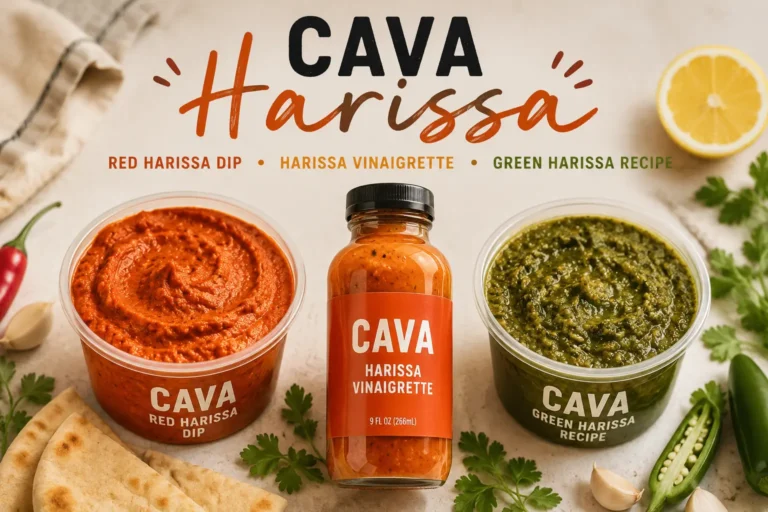
| Harissa | ✅ Acceptable | Chili paste — plant-based ingredients |
| Roasted Eggplant Dip | ✅ Acceptable | Plant-based |
All six CAVA dips are acceptable from a halal ingredient perspective. None contains pork, alcohol, or prohibited substances. Cross-contact in a shared kitchen is the only consideration.
Halal Status of CAVA Dressings
| Dressing | Halal Status | Notes |
|---|---|---|
| Greek Vinaigrette | ✅ Acceptable | Plant-based |
| Lemon Herb Tahini | ✅ Acceptable | Sesame based — plant-based |
| Hot Harissa Vinaigrette | ✅ Acceptable | Plant-based |
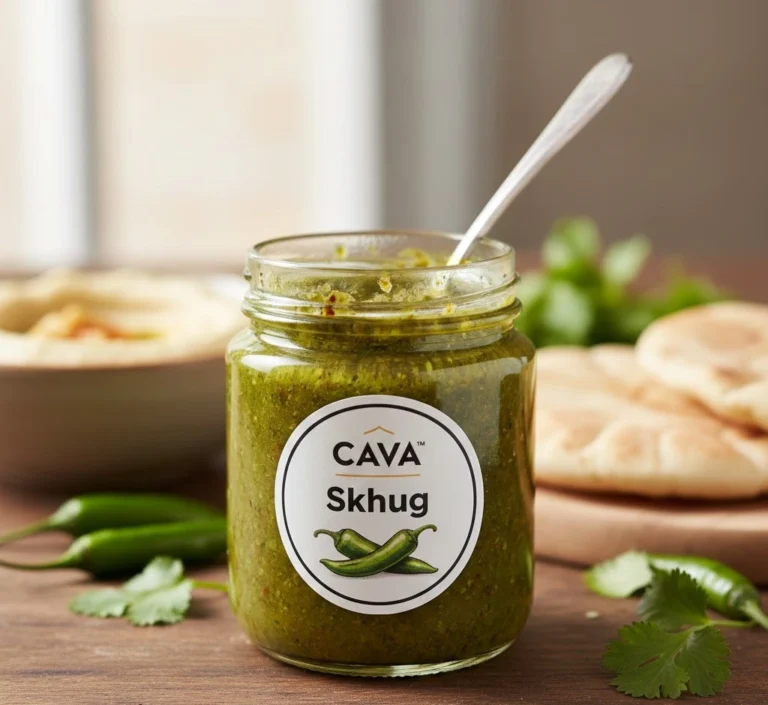
| Skhug | ✅ Acceptable | Herb and chili based — plant-based |
| Balsamic Date Vinaigrette | ✅ Acceptable | Plant-based |
| Yogurt Dill | ✅ Acceptable | Contains dairy — halal from ingredient standpoint |
| Garlic Sauce | ✅ Acceptable | Plant-based |
| Tahini Caesar | ✅ Acceptable | Sesame based — plant-based |
All CAVA dressings are acceptable from a halal ingredient perspective. CAVA does not use alcohol in any of its dressings or sauces.
Cross-Contamination at CAVA, What Muslim Diners Need to Know
This is the most important practical consideration beyond individual ingredient halal status.
CAVA operates an open assembly-line kitchen where all proteins — halal-acceptable and non-halal — are prepared in the same environment. This means:
Shared preparation surfaces: The same counter where falafel is placed may have had grilled chicken on it moments earlier.
Shared serving utensils: Staff use different utensils for each ingredient but in a busy environment cross-contact can occur.
Shared cooking equipment: Proteins are cooked on the same grill or hot line. Juices from non-halal chicken may come into contact with surfaces used for other items.
What to do if cross-contact concerns you:
- Inform the staff member serving you that you have a halal dietary requirement before they begin building your bowl
- Ask them to change their gloves before handling your order
- Request fresh utensils for your items
- Visit during quieter hours when staff have more time to take care
CAVA staff are generally accommodating of dietary requests. Making your requirement clear before ordering gives you the best chance of a carefully prepared meal.
What Can Muslims Order at CAVA?
Based on everything above here is a practical ordering guide for Muslim diners:
✅ The Safest Halal-Friendly Build at CAVA
| Component | Choice |
|---|---|
| Base | Black Lentils or SuperGreens |
| Protein | Falafel or Roasted Vegetables |
| Dips | Hummus + Harissa |
| Toppings | Tomato + Cucumber, Pickled Onions, Fire-Roasted Corn — all plant-based |
| Dressing | Greek Vinaigrette or Skhug |
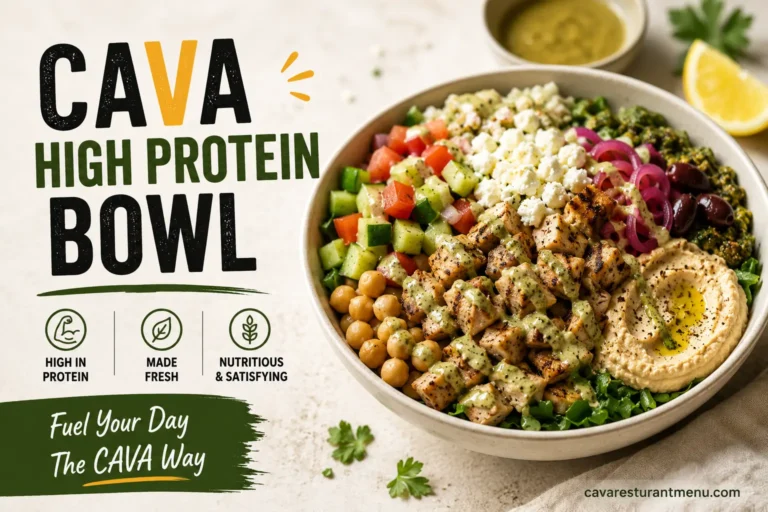
This build contains zero animal products that could raise halal concerns and delivers a genuinely satisfying Mediterranean meal at approximately 500 to 600 calories with strong protein from falafel and lentils combined.
✅ For Those Who Accept the Braised Lamb
If you follow a less strict interpretation and are comfortable with halal-sourced meat that is not fully certified:
| Component | Choice |
|---|---|
| Base | Black Lentils or Brown Rice |
| Protein | Braised Lamb |
| Dips | Hummus + Tzatziki |
| Toppings | Tomato + Cucumber, Pickled Onions, Kalamata Olives |
| Dressing | Lemon Herb Tahini |
Confirm the halal acceptability of this choice with your scholar or imam before ordering. This is a personal religious judgement, not one this guide can make for you.
Is CAVA Halal Compared to Other Fast-Casual Restaurants?
| Restaurant | Halal Certified | Halal Meat Options | Safe Vegetarian Options |
|---|---|---|---|
| CAVA | ❌ No | Braised lamb meat only | ✅ Strong |
| Chipotle | ❌ No | ❌ None | ✅ Good |
| Sweetgreen | ❌ No | ❌ None | ✅ Strong |
| Panera | ❌ No | ❌ None | ✅ Moderate |
| The Halal Guys | ✅ Yes | ✅ All proteins | ✅ Strong |
Among mainstream fast-casual chains, CAVA actually has a slight edge over Chipotle and Sweetgreen because of the braised lamb’s halal-sourced meat, even if not fully certified. The Halal Guys is the obvious choice for Muslim diners who require full halal certification.
Will CAVA Ever Become Fully Halal Certified?
CAVA has not announced any plans to pursue restaurant-wide halal certification as of 2026. As the chain expands into markets with larger Muslim populations, this may change, but currently there is no indication of a halal certification program in development.
CAVA’s sustainability page confirms they work with suppliers across various dietary certifications including halal for specific ingredients. This suggests an awareness of halal requirements at the supply chain level but has not translated into restaurant-level certification.