CAVA Dressings Menu
The dressing is where most CAVA orders succeed or fall apart.
You have built the right base, chosen the right protein, picked three good dips, and then you default to the same dressing you always get without thinking about whether it actually fits the bowl you have built. Or worse, you pick at random and end up with garlic sauce on a lamb bowl that already has three rich components, or yogurt dill on a steak bowl that needs acidity and heat.
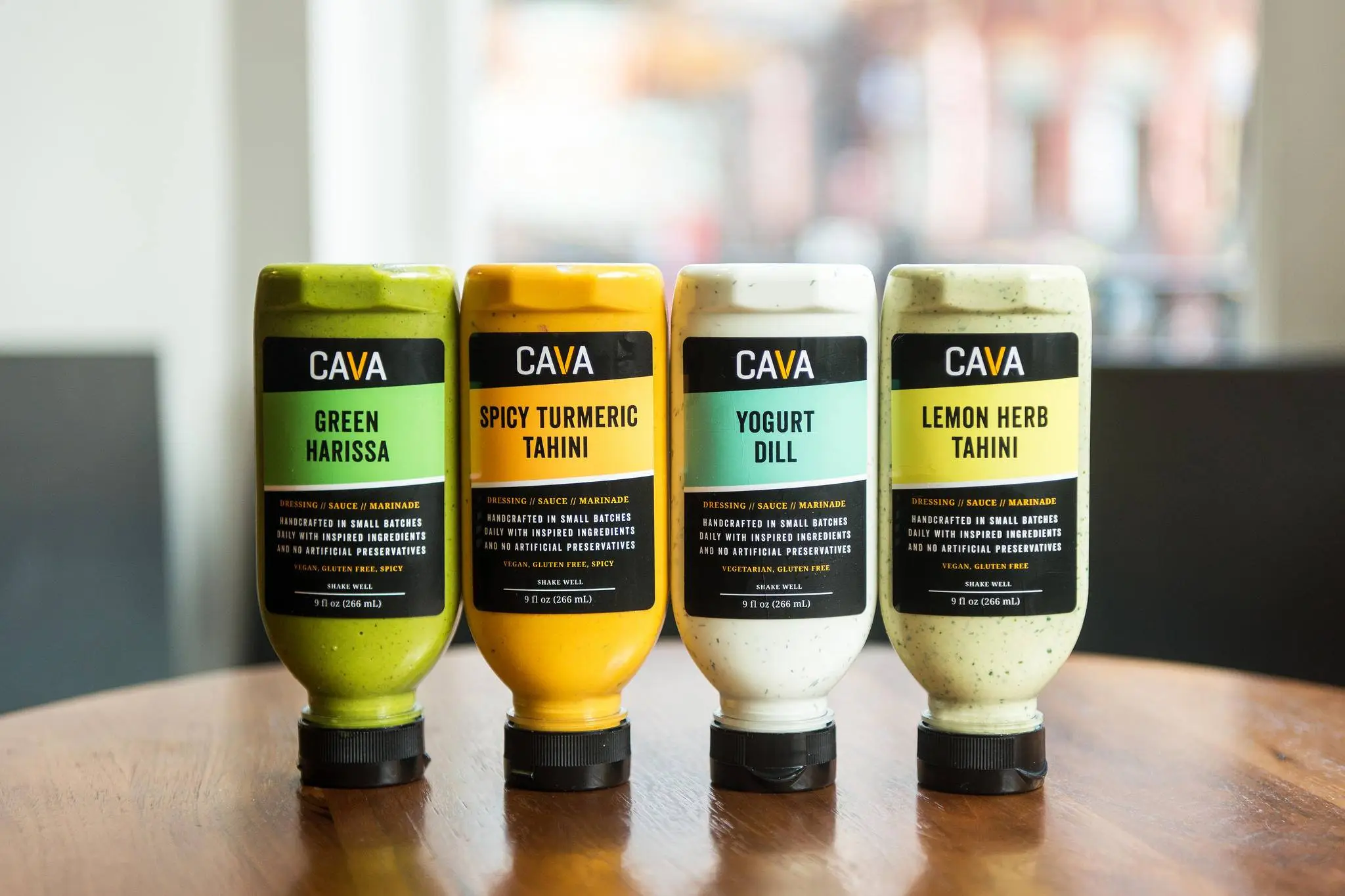
CAVA menu has eight dressings. Every single one is included free. Each one has a distinct flavor profile, a different calorie count, a cultural origin, and a specific set of ingredients that make it better for certain combinations and worse for others.
Why CAVA’s Dressings Matter More Than Most People Realise
A full pour of garlic dressing at CAVA adds 170 calories to your bowl. A full pour of yogurt dill adds 30. That is a 140-calorie difference from a single ingredient choice that nobody sees coming when they are standing at the counter. At CAVA’s portion sizes, dressings can add anywhere from 30 to 180 calories per bowl, and sodium swings can be even more dramatic, from 40mg for yogurt dill to 220mg for Greek vinaigrette.
Beyond the nutrition impact, dressings are also the single most underanalysed flavor element in the bowl. Most people choose the protein, decide on the dips, and then pick a dressing almost as an afterthought. But the dressing is the last flavor the tongue registers with every bite, it is what lingers, what ties the bowl together, and what determines whether the whole combination feels cohesive or discordant.
The eight dressings at CAVA cover every major flavor direction: nutty and bright (lemon herb tahini), bold and garlicky (garlic sauce), light and acidic (Greek vinaigrette), spicy and tangy (hot harissa vinaigrette), herbaceous and fiery (skhug), umami-rich and sesame-forward (tahini Caesar), cool and creamy (yogurt dill), and sweet and complex (balsamic date vinaigrette). Understanding what each one actually does is what separates a deliberate CAVA order from a lucky one.
All 8 CAVA Dressings
Lemon Herb Tahini Most Popular Dressing
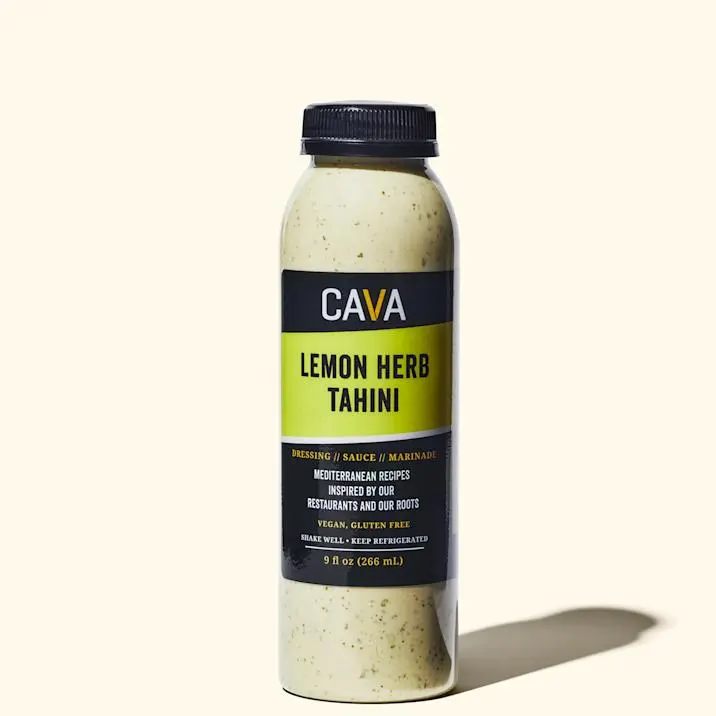
Calories: 70 cal per serving Macros: 6g fat · 4g carbs · 2g protein · 130mg sodium
- Vegan: Yes
- Gluten-Free: Yes
- Dairy-Free: Yes
- Allergens: Sesame (tahini)
Key Ingredients: Sesame tahini · lemon juice · fresh herbs (cilantro, parsley, and/or chives) · garlic · water · salt
What it is: Lemon herb tahini is CAVA’s most ordered dressing system-wide, confirmed by CAVA’s own TikTok account, which described it as their “second most popular dressing” in a video that generated significant engagement. It is a sesame-forward sauce made from tahini thinned with lemon juice and water, brightened with fresh herbs and garlic. The result is nutty from the sesame, acidic from the lemon, aromatic from the herbs, and light enough to be versatile across almost every bowl combination.
Tahini itself is sesame paste, roasted sesame seeds ground into a smooth, creamy butter. It has been used in Middle Eastern and Mediterranean cooking for centuries, appearing in historical texts as far back as the 13th century in texts from the Arab world. Combined with lemon juice, it forms the base of multiple classic Mediterranean sauces and dressings. CAVA’s version adds fresh herbs, primarily cilantro, though parsley and chives also feature in verified copycat analyses, and garlic to create a dressing that feels specifically designed for Mediterranean grain bowls.
Available at retail: Yes, sold at Whole Foods as Lemon Herb Tahini Dressing at approximately $5.79 per bottle. Also available through the CAVA grocery line in select locations.
Calorie context: At 70 calories, lemon herb tahini is one of the lighter dressings on the menu and the best value in terms of flavor delivered per calorie. It is also vegan, dairy-free, and gluten-free, the most accommodating dressing on the menu from a dietary standpoint.
Best paired with: Spicy Lamb + Avocado Bowl · Falafel Crunch Bowl · any bowl with black lentils as the base · any vegetarian or vegan build. The brightness of the lemon cuts through the richness of lamb and falafel proteins specifically well. On a greens-only bowl, it is the dressing that keeps things from feeling sparse.
Worst paired with: Shawarma-style bowls that already have garlic sauce, two bold, oil-heavy dressings on the same bowl create a one-dimensional richness that the lemon herb tahini is specifically designed to prevent.
Garlic Sauce Bold One
Calories: 170 cal per serving Macros: 19g fat · 0g carbs · 0g protein · 65mg sodium
- Vegan: Yes
- Gluten-Free: Yes
- Dairy-Free: Yes
- Allergens: None major
Key Ingredients: Fresh garlic cloves · aquafaba (liquid from canned chickpeas) · lemon juice · salt · neutral oil (canola or avocado)
What it is: CAVA’s garlic sauce is their interpretation of toum, the Lebanese white garlic sauce traditionally made by emulsifying garlic, lemon, salt, and oil into a light, fluffy paste. CAVA’s version uses aquafaba (the liquid from a can of chickpeas) as the emulsifier rather than traditional raw egg whites, which makes it dairy-free and vegan while giving it a slightly looser, more drizzle-friendly consistency than classic toum.
The key difference between CAVA’s garlic sauce and a standard toum is texture. Traditional Lebanese toum is thick and spreadable, almost like a mayonnaise. CAVA’s version is glossier and looser, designed to drizzle cleanly over a grain bowl or pita wrap rather than sit as a spread. The aquafaba softens the raw garlic bite slightly while maintaining the intensity that makes this sauce so divisive: either people love it and order it on everything, or they find it too overpowering and avoid it completely.
The cultural context: Toum is a cornerstone of Lebanese cuisine. The word means “garlic” in Arabic, and the sauce has appeared on Lebanese tables alongside grilled meats, falafel, and shawarma for generations. It is the defining condiment of the Lebanese table, the equivalent of what ketchup is in the United States or what mustard is in France, and its presence at CAVA reflects the broad reach of Levantine food culture into the American Mediterranean dining space. CAVA’s decision to use aquafaba as the emulsifier is a modern American adaptation that makes the sauce more widely accessible without sacrificing the core flavor.
Available at retail: Not widely confirmed in the retail grocery line, check cava.com/wheretobuy for current availability.
Calorie context: At 170 calories, garlic sauce is the highest-calorie dressing on the menu by a significant margin. The calorie count comes almost entirely from fat, 19g per serving, making it a consideration for anyone tracking macros. The sodium, by contrast, is the lowest of any dressing at 65mg, which makes it a counterintuitive choice for sodium-conscious eaters.
Best paired with: Chicken Shawarma Pita · Garlicky Chicken Shawarma Bowl · any bowl where garlic sauce is already part of the curated recipe. It is the defining flavor of the shawarma-style builds and the reason they taste the way they do. Also works well alongside harissa honey chicken, the sweet heat of the chicken and the bold creaminess of the garlic create a push-pull that works in every bite.
Worst paired with: Falafel bowls that also have Crazy Feta and eggplant dip, the garlic sauce competes with the eggplant dip’s smokiness and the Crazy Feta’s tang without complementing either. Rich bowls need contrast, not more richness.
Greek Vinaigrette CAVA dressing The Classic
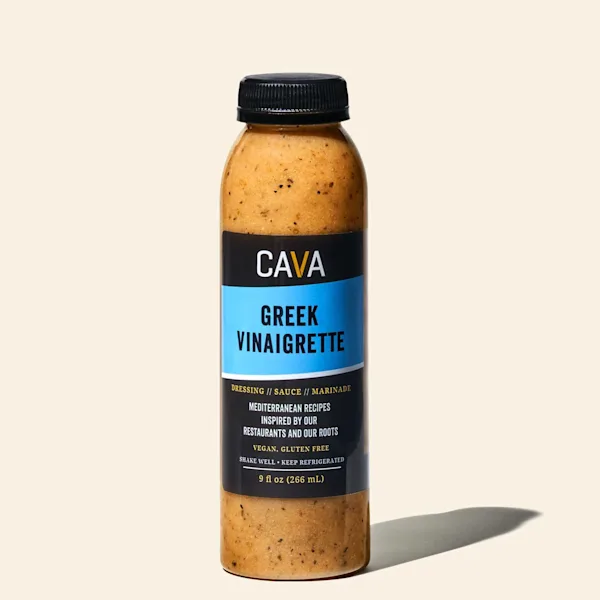
Calories: 130 cal per serving Macros: 14g fat · 1g carbs · 0g protein · 260mg sodium
- Vegan: Yes
- Gluten-Free: Yes
- Dairy-Free: Yes
- Allergens: None major
Key Ingredients: Extra-virgin olive oil · red wine vinegar · Dijon mustard · oregano · garlic · lemon juice · salt · pepper
What it is: CAVA describes it simply: “Who’s the hero in this dressing? Oregano! Our vinaigrette uses lots of it! Blended with garlic, Dijon, red wine vinegar, and lemon juice.” A clean, herb-forward vinaigrette built on a foundation of extra-virgin olive oil and red wine vinegar, the most classically Mediterranean dressing on the menu.
Oregano is genuinely the defining ingredient here. Greek oregano (Origanum vulgare subsp. hirtum) is more aromatic and intense than the Italian variety and has been used in Greek cooking for millennia, it appears in the writings of ancient Greek physicians and was considered sacred in Greek mythology. In modern Greek cuisine, it seasons everything from grilled meats to salads to grilled fish. CAVA’s emphasis on oregano as the star of this vinaigrette is an accurate reflection of how central the herb is to Greek food.
The cultural context: Vinaigrette oil and vinegar, is the simplest and oldest dressing in Mediterranean cooking. The Greek version traditionally uses olive oil, red wine vinegar, dried oregano, garlic, and sometimes lemon juice. It is the dressing served at every traditional Greek salad (horiatiki) table and has remained largely unchanged for centuries because there is nothing to improve. CAVA’s version adds Dijon mustard as a modern emulsifier that helps the dressing stay blended and gives it a slight bite that traditional Greek vinaigrette does not always have.
Available at retail: Yes, sold at select Whole Foods locations as Greek Vinaigrette.
Calorie context: At 130 calories, Greek vinaigrette sits in the mid-range of the dressing lineup. The 260mg of sodium is the highest of any dressing, worth noting for anyone managing sodium intake.
Best paired with: Greek Salad Bowl · Greek Chicken Pita · any bowl with romaine as a base · bowls built around olives and feta. The oregano and red wine vinegar specifically complement the briny, salty character of kalamata olives and crumbled feta. The Chicken + Rice Bowl uses it to bright, clean effect.
Worst paired with: Spicy lamb or harissa bowls, the Greek vinaigrette is too clean and light to stand up against bold heat. It gets lost behind harissa proteins rather than complementing them.
Hot Harissa Vinaigrette The Spicy Finisher

Calories: 70 cal per serving Macros: 7g fat · 1g carbs · 0g protein · 220mg sodium
- Vegan: Yes
- Gluten-Free: Yes
- Dairy-Free: Yes
- Allergens: None major
Key Ingredients: Harissa paste · olive oil · red wine vinegar or lemon juice · garlic · spices
What it is: Hot harissa vinaigrette is the dressing version of CAVA’s harissa dip, the same North African chili paste thinned with oil and an acidic element (vinegar or citrus) into a pourable sauce. It carries the same smoky, tomato-forward, moderately spicy character as the dip but with the additional tang and lightness of a vinaigrette, which makes it work differently in a bowl context. Where the harissa dip sits as a thick, concentrated layer, the vinaigrette disperses heat and smokiness throughout the entire bowl.
The cultural context: The harissa vinaigrette connects directly to the North African tradition of using harissa as a marinade and sauce rather than just a dip. In Tunisian and Moroccan cooking, harissa is frequently thinned with olive oil and lemon juice and used to dress salads, coat grilled meats, or finish couscous dishes before serving. CAVA’s vinaigrette version of their harissa is a direct expression of this tradition, the same ingredient, used in a different but equally traditional form. For the cultural history of harissa itself, see the dedicated section in the CAVA Dips & Spreads page.
Calorie context: At 70 calories, the same as lemon herb tahini, hot harissa vinaigrette is one of the best calorie-to-flavor options on the dressing menu. Bold, complex, and spicy at just 70 calories per serving.
Best paired with: Harissa Avocado Bowl · Steak + Harissa Bowl · any bowl featuring harissa honey chicken where you want the heat to carry through the entire meal rather than sitting only at the dip layer. Also excellent on the Spicy Chicken + Avocado Pita, it reinforces the heat profile of the build without introducing a new flavor direction.
Worst paired with: Light, clean bowls like the Lemon Herb Chicken Bowl or SuperGreens + Grilled Chicken Bowl, the harissa vinaigrette overwhelms the fresh, herb-forward character of both.
Skhug CAVA dressing Most Underrated Dressing
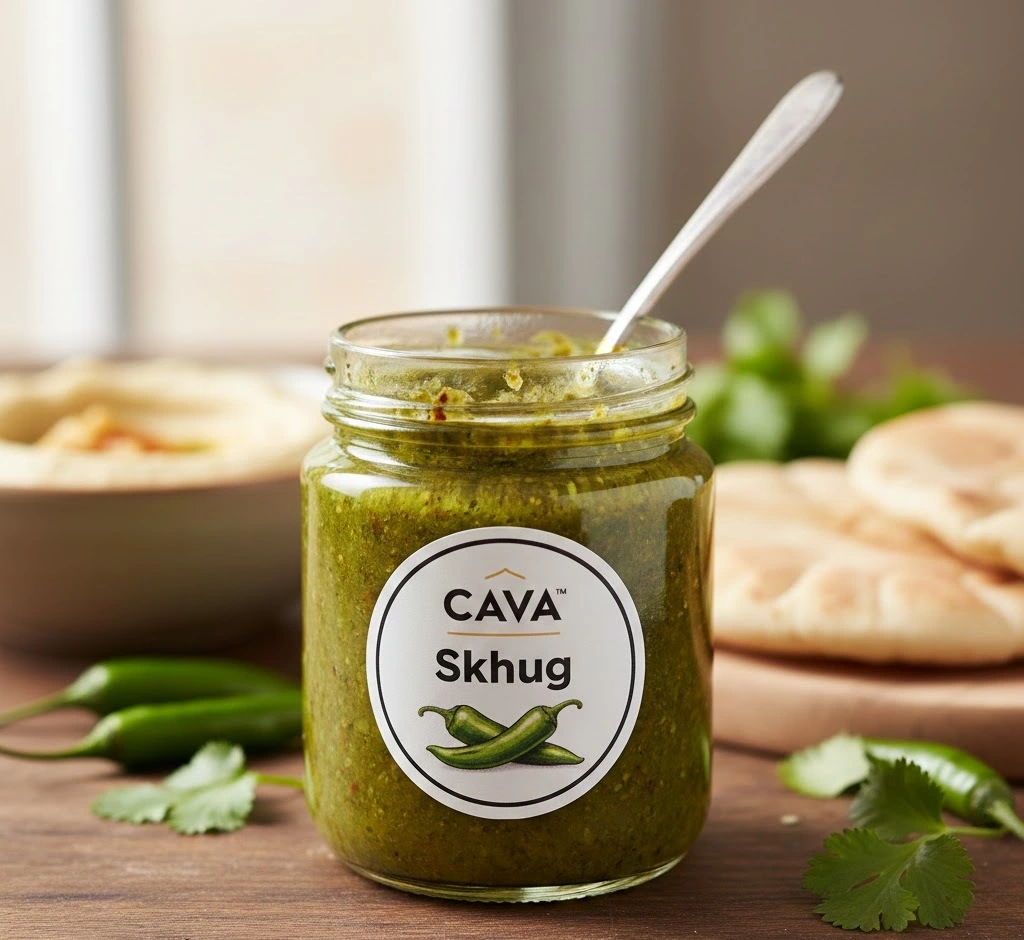
Calories: 90 cal per serving Macros: 9g fat · 1g carbs · 0g protein · 120mg sodium
- Vegan: Yes
- Gluten-Free: Yes
- Dairy-Free: Yes
- Allergens: None major
Key Ingredients: Fresh cilantro · jalapeño peppers · garlic · olive oil · lemon juice · cumin · coriander · salt
What it is: Skhug (also spelled zhug, zhoug, or schug, all pronounced approximately “zoog”) is CAVA’s most misunderstood and most underused dressing. It is a bright green Yemenite herb chili sauce, herbaceous, fiery, and deeply aromatic, that most people at CAVA either do not order at all or only order after a regular points them toward it.
CAVA’s version is made from cilantro, jalapeños, garlic, olive oil, lemon juice, and warm spices. It sits at the intersection of fresh herb sauce and spicy condiment, closer in structure to a chimichurri or salsa verde than to any conventional salad dressing, which is part of what makes it so interesting and part of why it confuses people who are expecting something that tastes like ranch.
Calorie context: At 90 calories with 120mg sodium, skhug is a moderate-calorie, moderate-sodium dressing with a very high flavor output for its calorie cost.
The rule of skhug: Always ask for it on the side in addition to your main dressing. It works better as a finishing drizzle you add bite by bite than as the sole dressing distributed throughout the entire bowl. This is how it is traditionally eaten in Yemeni and Israeli cooking, not as a base sauce but as a layered condiment.
The cultural context: Skhug is one of the most historically significant sauces in this guide. It originated in Yemeni cuisine, the word sahawiq in Yemeni Arabic comes from the root meaning “to crush” or “to pestle,” reflecting how the sauce was traditionally made: by grinding fresh herbs, garlic, and hot peppers using a mortar and pestle.
Zhug was brought to Israel during the large migration of Yemeni Jewish communities in the early 1950s. In Israel, it became a staple condiment at falafel stands, shawarma shops, and hummus restaurants across the country, spreading throughout Israeli cuisine and eventually reaching the Lebanese, Palestinian, and broader Levantine food traditions as well. Today it is found across the Middle East and has spread globally through Israeli and Middle Eastern restaurant culture, and in the United States, specifically through CAVA.
CAVA is largely responsible for introducing skhug to American mainstream food culture. Before CAVA built it into their standard dressing menu, skhug was almost unknown outside Middle Eastern immigrant communities and specialty food stores in the US.
Yemenites believe that daily consumption of skhug can keep illness at bay and strengthen the heart, a claim rooted in the health properties of fresh herbs, garlic, and capsaicin from the chili peppers. While no clinical evidence supports these specific claims, the ingredients themselves are individually associated with anti-inflammatory and cardiovascular benefits.
Available at retail: Not widely confirmed in the retail line, skhug is primarily available through the restaurant experience.
Best paired with: Falafel Crunch Bowl · any shawarma-style build · grilled chicken bowls where you want brightness and heat simultaneously without the creaminess of garlic sauce. The Garlicky Chicken Shawarma Bowl uses skhug and garlic dressing together specifically because the green herbaceous heat of the skhug contrasts the white creaminess of the garlic sauce in a way that makes both more interesting.
Worst paired with: Anything where cilantro is already a dominant flavor, the herb overlap becomes one-dimensional. Also less effective on heavy lamb bowls where the intensity of the meat needs something cooling rather than more heat.
Tahini Caesar Mediterranean Caesar
Calories: 90 cal per serving Macros: 8g fat · 3g carbs · 2g protein · 10mg sodium
- Vegan: Yes
- Gluten-Free: Yes
- Dairy-Free: Yes
- Allergens: Sesame (tahini)
Key Ingredients: Sesame tahini · lemon juice · garlic · Dijon mustard · spices · water · salt
What it is: Tahini Caesar is CAVA’s Mediterranean reimagining of the classic Caesar dressing, a dressing that traditionally contains anchovies, egg yolks, Parmesan, and Worcestershire sauce, none of which belong in a Mediterranean fast-casual context. CAVA replaces the entire anchovy-egg-Parmesan structure with sesame tahini as the base, keeping the lemon, garlic, and Dijon mustard that give Caesar its characteristic umami tang, and building the richness from sesame rather than from egg and fish.
The result is a dressing that delivers Caesar-adjacent flavors, nutty, umami-rich, slightly sharp, without any dairy, egg, or animal products, making it genuinely vegan. At only 10mg of sodium, it is the lowest-sodium dressing on the menu by a considerable margin, which is a counterintuitive fact given how rich and salty it tastes.
Calorie context: At 90 calories, tahini Caesar sits in the same range as skhug and is moderate across all macros. The sesame allergen is the primary dietary consideration.
Best paired with: Tahini Caesar Bowl (the curated bowl is built specifically around this dressing) · any romaine-based bowl · the Steak + Feta Pita where the umami depth of the tahini Caesar works well alongside the richness of the steak and Crazy Feta. The Spicy Lamb + Sweet Potato Bowl uses tahini Caesar specifically because the sweetness of the white sweet potato needs a dressing with savory depth to balance it.
Worst paired with: Light greens-only bowls, the richness of the tahini Caesar can overwhelm a sparse build. It performs best when there are substantial ingredients around it to absorb the dressing.
Yogurt Dill The Lightest Dressing
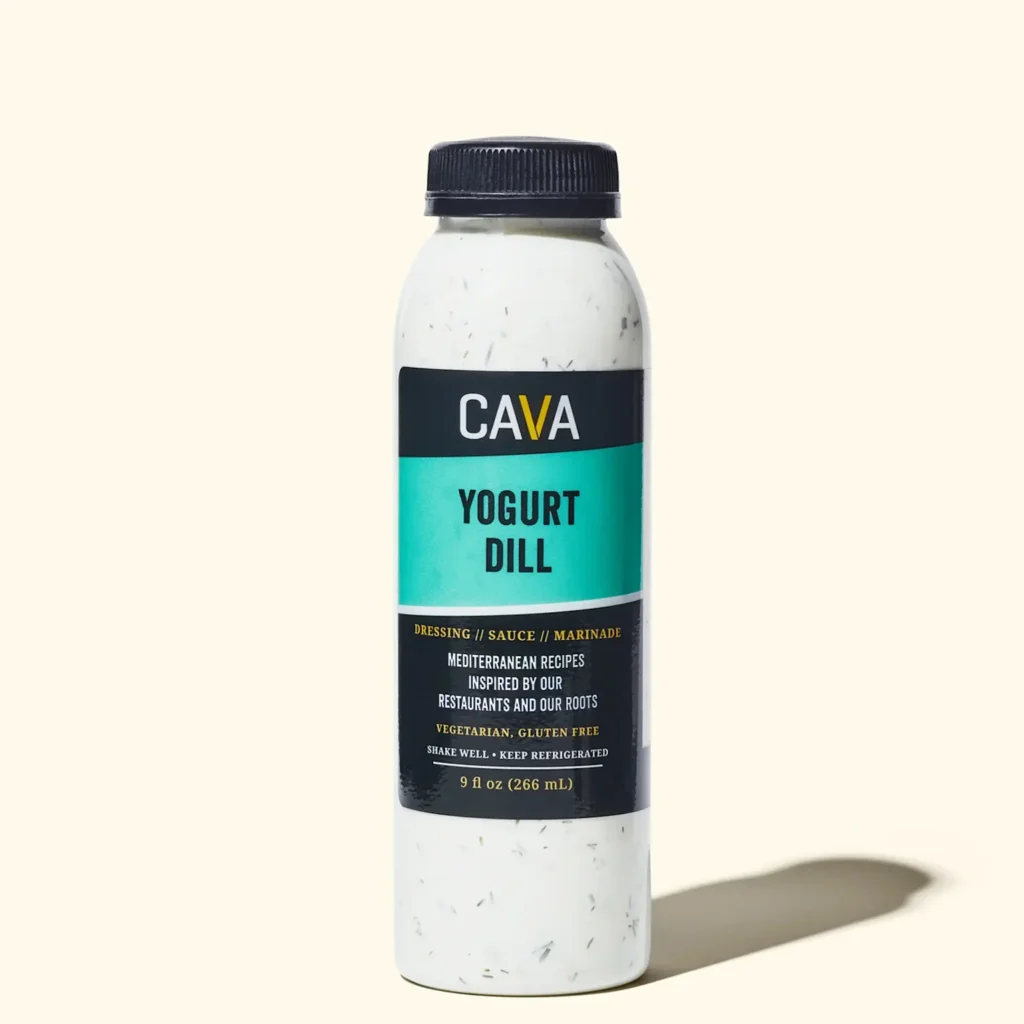
Calories: 30 cal per serving Macros: 2g fat · 1g carbs · 2g protein · 40mg sodium
- Vegan: No
- Gluten-Free: Yes
- Dairy-Free: No
- Allergens: Dairy (Greek yogurt)
Key Ingredients: Greek yogurt · cucumber · dill · lemon juice · garlic · salt
What it is: Yogurt dill is CAVA’s lightest dressing at 30 calories, and the one that most closely resembles the tzatziki dip in flavor profile, which is not a coincidence since both are built around Greek yogurt, cucumber, and dill. The difference is consistency: tzatziki is thick enough to be a dip or spread, while yogurt dill is thinned to a pourable dressing texture that distributes evenly throughout a bowl.
CAVA describes it as “a refreshing dressing with Greek yogurt, lots of dill, and cucumbers. A dressing with dimension.” The dill here is the defining herb, fresh dill has a distinct anise-adjacent aroma that is almost uniquely associated with Greek and Scandinavian cuisines. In the Greek tradition, dill (aneth) has been used in cooking since antiquity and features prominently in tzatziki, spanakopita, and various fish preparations.
Calorie context: At 30 calories with 40mg sodium, yogurt dill is the best choice for anyone eating at CAVA on a calorie or sodium budget while still wanting a dressing with genuine flavor and substance.
The cultural context: Yogurt-based sauces and dressings have deep roots in the entire Mediterranean to Central Asian corridor. Greek yogurt, specifically thick, strained, with a higher protein content than regular yogurt, has been produced in Greece for centuries and was historically made from sheep’s milk, giving it a richness and tanginess that mass-produced cow’s milk yogurt does not fully replicate. CAVA uses Greek-style yogurt in both their tzatziki dip and yogurt dill dressing, which contributes to the protein content (2g per serving) that makes this dressing nutritionally unusual for its calorie level.
Available at retail: Yes — sold at Whole Foods as Yogurt Dill Dressing at approximately $5.79 per bottle.
Best paired with: SuperGreens + Grilled Chicken Bowl · Harissa Chicken Power Bowl (the new 2026 bowl uses it specifically to cool the heat of the skhug and harissa elements) · any bowl that needs a cool, clean finish rather than additional richness. Also works well as a secondary dressing alongside a bolder choice like skhug or hot harissa vinaigrette, the yogurt dill cools what the other dressing heats.
Worst paired with: Steak bowls or lamb bowls where a bolder, more acidic dressing is needed to cut through the fat. Yogurt dill is too mild to provide the contrast these proteins require.
Balsamic Date Vinaigrette Unexpected One
Calories: ~80 cal per serving Macros: ~5g fat · ~9g carbs · 0g protein · ~80mg sodium
- Vegan: Yes
- Gluten-Free: Yes
- Dairy-Free: Yes
- Allergens: None major
Key Ingredients: Whole dates · white balsamic vinegar · Dijon mustard · olive oil (or avocado oil) · water · salt
What it is: CAVA describes their balsamic date vinaigrette as “sweet and tangy. Whole dates blended with white balsamic vinegar and Dijon mustard.” This is the most distinctive dressing on the menu, sweet, acidic, and complex in a way that none of the other seven dressings approach. The dates provide natural sweetness and body without added sugar. The white balsamic vinegar provides a softer, less sharp acidity than red wine vinegar. The Dijon mustard acts as an emulsifier and adds a subtle sharpness that stops the sweetness from becoming cloying.
Calorie context: Approximate figures based on verified recipe proportions from multiple sources , always check the CAVA app for current official data as seasonal adjustments may apply.
The sommelier principle: Think of balsamic date vinaigrette the way a sommelier thinks of dessert wine with rich cheese. The sweetness does not fight the richness, it resolves it. The same principle applies in a CAVA bowl: rich, fatty proteins like braised lamb or grilled steak taste more complete, more rounded, when finished with something sweet-acidic rather than purely acidic.
The cultural context: Dates have been central to Middle Eastern and North African cuisine for thousands of years, they are mentioned in ancient Egyptian and Mesopotamian records and feature prominently in the food traditions of the Arabian Peninsula, where date palms are cultivated extensively. Using dates as a sweetener in sauces and dressings is a practice with deep roots in Levantine and Gulf cooking, where the natural fruit sugar of the date is preferred over refined cane sugar for its flavour complexity and nutritional profile. CAVA’s balsamic date vinaigrette sits at the intersection of Italian balsamic tradition and Middle Eastern date culture, a genuinely modern Mediterranean hybrid.
White balsamic vinegar, as distinct from the more familiar aged balsamic, is lighter in color, less sweet, and more acidic. It provides the tang of a traditional vinaigrette without the thick sweetness of aged balsamic, which allows the date sweetness to be the primary sweet note rather than the vinegar.
Best paired with: Yaxel’s Game Day Bowl (the 2026 collaboration bowl uses balsamic date dressing with grilled steak specifically) · Steak + Harissa Bowl · any bowl with braised lamb, the sweetness of the date cuts through the richness of the lamb in a way that no other dressing on the menu achieves. Also works with roasted sweet potato as a protein, the natural sweetness of the potato and the date vinaigrette form a complementary sweetness that is balanced by whatever protein accompanies them.
Worst paired with: Spicy bowls, the sweetness of the date does not work alongside harissa heat the way that acidity or coolness does. On a Harissa Avocado Bowl, balsamic date vinaigrette creates a sweetness overload where hot harissa vinaigrette or lemon herb tahini would create balance.
All 8 CAVA Dressings — Quick Reference Table
| Dressing | Cal | Fat | Sodium | Vegan | Dairy-Free | Sesame-Free | Best With |
| Yogurt Dill | 30 | 2g | 40mg | ✗ | ✗ | ✓ | Light chicken bowls, spicy bowls needing cool finish |
| Hot Harissa Vinaigrette | 70 | 7g | 220mg | ✓ | ✓ | ✓ | Harissa bowls, steak bowls |
| Lemon Herb Tahini | 70 | 6g | 130mg | ✓ | ✓ | ✗ | Lamb, falafel, most vegetarian builds |
| Balsamic Date Vinaigrette | ~80 | ~5g | ~80mg | ✓ | ✓ | ✓ | Steak, braised lamb, sweet potato |
| Skhug | 90 | 9g | 120mg | ✓ | ✓ | ✓ | Shawarma bowls, falafel, use as a side drizzle |
| Tahini Caesar | 90 | 8g | 10mg | ✓ | ✓ | ✗ | Romaine bowls, lamb, sweet potato |
| Greek Vinaigrette | 130 | 14g | 260mg | ✓ | ✓ | ✓ | Greek Salad Bowl, olives and feta builds |
| Garlic Sauce | 170 | 19g | 65mg | ✓ | ✓ | ✓ | Shawarma bowls, harissa honey chicken |
CAVA Dressing Pairings — The Complete Guide
By Protein
Grilled Chicken Works with almost every dressing. Lemon herb tahini is the most popular match. Greek vinaigrette is the cleanest. Yogurt dill is the lightest calorie choice.
Harissa Honey Chicken Hot harissa vinaigrette doubles the heat through the bowl. Garlic sauce provides creamy contrast. Lemon herb tahini brightens it. Avoid Greek vinaigrette, too mild to stand up to the harissa glaze.
Spicy Lamb Meatballs Lemon herb tahini is the classic match. Tahini Caesar adds umami depth. Balsamic date vinaigrette adds sweet complexity. Avoid garlic sauce, too rich alongside the fat content of the lamb.
Braised Lamb Balsamic date vinaigrette is the best match on the menu. Greek vinaigrette works for acidity. Avoid yogurt dill, too mild for braised lamb’s intensity.
Grilled Steak Hot harissa vinaigrette provides heat and acidity. Balsamic date vinaigrette provides sweet resolution. Greek vinaigrette provides clean acidity. All three work. Avoid garlic sauce unless you specifically want a shawarma-style build.
Falafel Lemon herb tahini is the natural partner, tahini and chickpeas are made for each other. Skhug adds herbaceous heat that lifts the falafel’s earthiness. Greek vinaigrette adds clean acidity.
Roasted Vegetables Greek vinaigrette or lemon herb tahini. Both complement the natural sweetness of roasted vegetables without overpowering.
Roasted White Sweet Potato Balsamic date vinaigrette or tahini Caesar. Both handle the starchy sweetness of the white sweet potato better than acidic dressings.
By Dietary Goal
Lowest calorie: Yogurt Dill (30 cal) Lowest sodium: Tahini Caesar (10mg) Most vegan-friendly options: All except Yogurt Dill Best for keto: Garlic Sauce (0g carbs, 0g net carbs), Hot Harissa Vinaigrette (1g carbs), Greek Vinaigrette (1g carbs) Best for high-protein: Yogurt Dill (2g protein per serving) and Lemon Herb Tahini (2g protein) — modest but the highest of the eight
The Dressing Mistake Most People Make at CAVA
The most common ordering error at CAVA is choosing a dressing that mirrors the flavour profile of the dips rather than contrasting it.
If you have chosen Crazy Feta (creamy, spicy, fatty) and harissa (smoky, spiced, oily) as two of your three dips, adding garlic sauce as your dressing creates a bowl of three rich, oily, bold components with nothing to provide contrast, freshness, or acidity. The result is a bowl that feels heavy after three bites rather than balanced throughout.
Examples of the principle in action:
- Crazy Feta + Harissa (both bold) → Lemon herb tahini (bright, acidic) ✓
- Hummus + Tzatziki (both cool and mild) → Hot harissa vinaigrette (heat and acidity) ✓
- Hummus + Eggplant Dip (both mild and earthy) → Skhug (herbaceous heat) ✓
- Hummus + Crazy Feta (creamy + spicy) → Greek vinaigrette (clean and acidic) ✓
The rule: if your dips are rich and bold, choose a dressing that is acidic or fresh. If your dips are light or acidic, you can choose a richer dressing. The dressing should complete the bowl, not repeat it.
CAVA Dressings at Whole Foods
CAVA sells several of its dressings in the grocery line at Whole Foods Market locations nationwide. Retail dressings follow the same recipes as the restaurant versions and can be used at home to recreate CAVA bowls or as general-purpose dressings and marinades.
Available retail dressings (most widely stocked):
- Lemon Herb Tahini Dressing (~$5.79 per bottle)
- Greek Vinaigrette (~$5.79 per bottle)
- Yogurt Dill Dressing (~$5.79 per bottle)
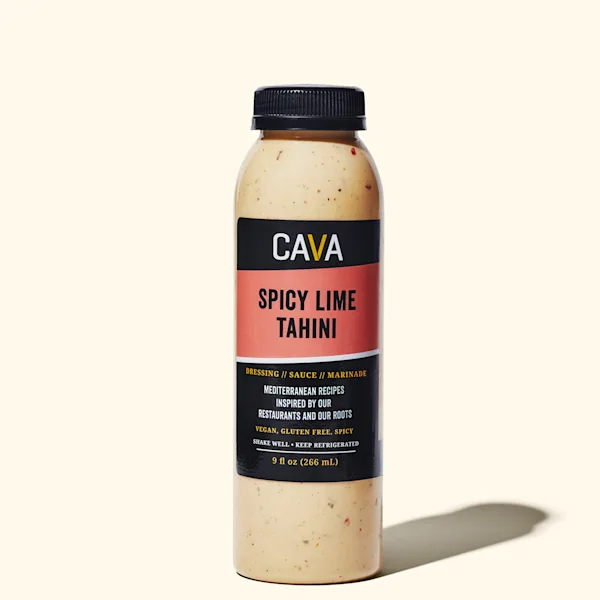
- Spicy Lime Tahini Dressing (retail-exclusive variant)
Also available at select locations:
- Additional dressing variants vary by region
Note: Spicy Lime Tahini is a retail-exclusive variant of the lemon herb tahini concept that is not available in-restaurant, it is specific to the Whole Foods grocery line and worth trying if you see it.
CAVA Dressings Allergen Guide
| Dressing | Wheat | Dairy | Sesame | Egg | Nuts |
| Lemon Herb Tahini | ✗ | ✗ | ✓ (tahini) | ✗ | ✗ |
| Garlic Sauce | ✗ | ✗ | ✗ | ✗ | ✗ |
| Greek Vinaigrette | ✗ | ✗ | ✗ | ✗ | ✗ |
| Hot Harissa Vinaigrette | ✗ | ✗ | ✗ | ✗ | ✗ |
| Skhug | ✗ | ✗ | ✗ | ✗ | ✗ |
| Tahini Caesar | ✗ | ✗ | ✓ (tahini) | ✗ | ✗ |
| Yogurt Dill | ✗ | ✓ (yogurt) | ✗ | ✗ | ✗ |
| Balsamic Date Vinaigrette | ✗ | ✗ | ✗ | ✗ | ✗ |
Key points:
- All dressings are gluten-free and nut-free
- Sesame-free options: Garlic Sauce, Greek Vinaigrette, Hot Harissa Vinaigrette, Skhug, Yogurt Dill, Balsamic Date Vinaigrette
- Dairy-free options: All except Yogurt Dill
- Vegan options: All except Yogurt Dill
Frequently Asked Questions about CAVA Dressings
Summary
Eight dressings. All free. All are built from real ingredients with genuine cultural stories behind them.
The lightest is yogurt dill at 30 calories. The boldest is garlic sauce at 170 calories. The most underrated is skhug, a Yemenite green chili sauce that CAVA has done more than almost any other American restaurant to bring into the mainstream. The most surprising is balsamic date vinaigrette, which most people never try until a regular orders it for them and then cannot order anything else.
Understanding what each dressing is, where it comes from, and how it interacts with your protein and dip choices turns a decent CAVA order into a precise one. The bowl you build when you know the dressing system is consistently better than the bowl you build when you do not.